
Clinics vs Hospitals in Dubai: 2026 Patient Guide
Dubai’s healthcare system is changing fast. Patients no longer choose care based only on the nearest hospital or the biggest name. They compare reviews, check insurance networks, book online, ask about waiting times, and look for doctors who understand their specific concern. For many residents, the real question is simple: should I visit a clinic or go to a hospital?
The answer depends on the condition, cost, urgency, insurance coverage, and the type of care you need. Clinics are becoming more specialized and convenient, while hospitals remain the stronger choice for emergencies, complex cases, surgeries, and advanced diagnostics. Dubai is also moving toward more connected digital healthcare, with telehealth, AI-supported care, and integrated patient records becoming more visible across the system. DHA’s telehealth standards also show how regulated digital care is becoming part of the formal healthcare journey in Dubai.
Understanding Dubai’s Healthcare Ecosystem
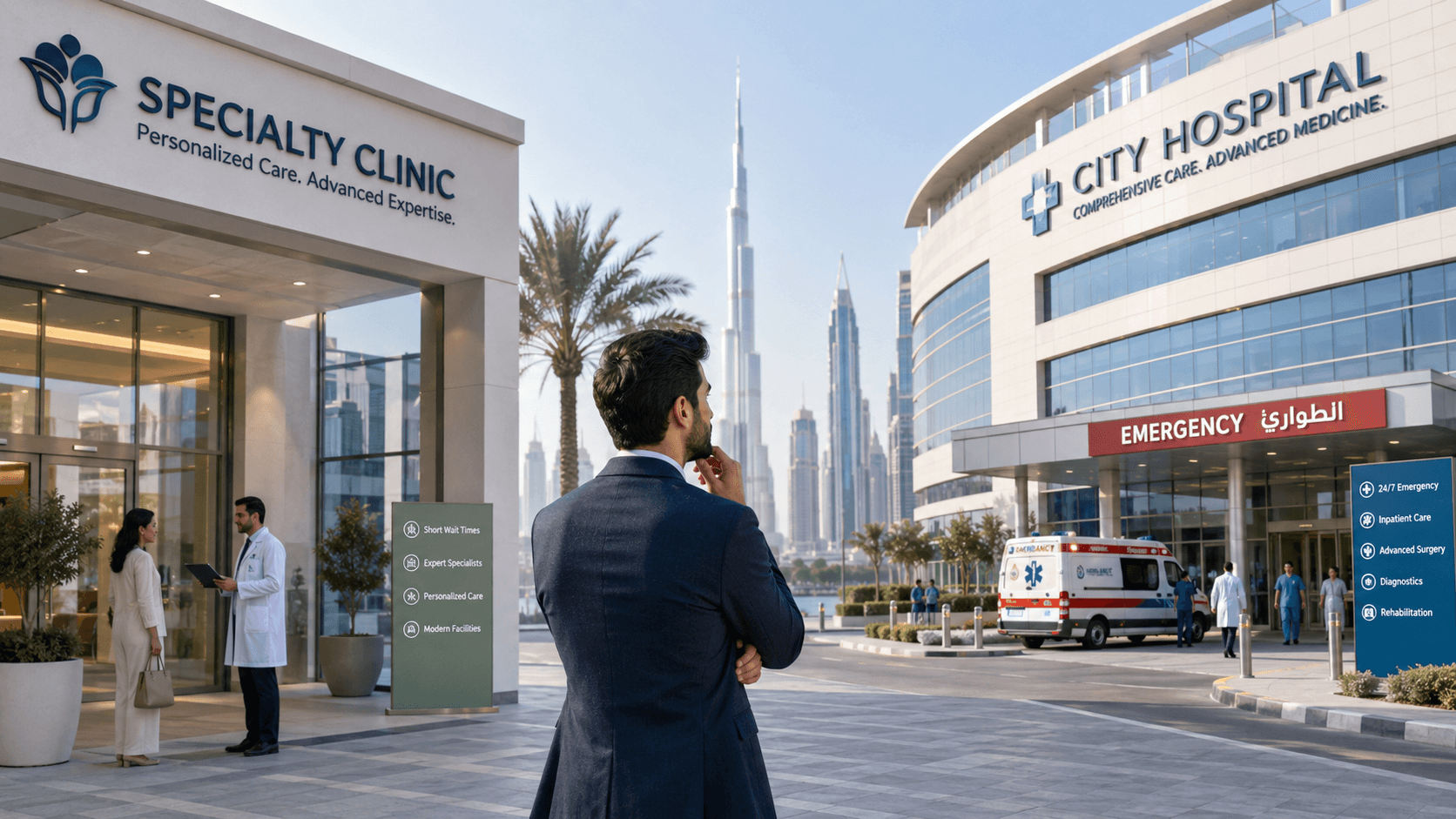
Dubai has a strong mix of private clinics, specialty centers, day surgery units, and large hospitals. For everyday medical needs, clinics often feel faster and easier. For serious cases, hospitals provide wider medical support under one roof.
Clinics usually focus on:
General consultations
Dental care
Dermatology
Physiotherapy
Pediatrics
Gynecology
ENT
Family medicine
Minor urgent care
Hospitals usually handle:
Emergency cases
Major surgeries
Intensive care
Advanced imaging
Specialist departments
Inpatient treatment
Complex chronic conditions
Dubai Health’s public network alone includes more than 50 locations, with hospitals, departments, specialties, and clinical facilities across the city. This shows how broad the healthcare infrastructure has become for residents and visitors.
The Clinic Advantage in 2026: Specialization and Accessibility
Clinics are becoming the first choice for many non-emergency needs in Dubai. The reason is clear: they are easier to access, faster to book, and often more focused on one type of treatment. A patient with acne, back pain, dental pain, hair loss, allergies, or a child’s fever may not want to spend hours inside a large hospital. A specialized clinic can often provide a quicker and more comfortable experience.
Specialized clinics are growing because patients want:
Shorter waiting times
Easier appointments
More personal attention
Clearer pricing
Doctor continuity
Convenient locations
Faster follow-ups
For example, someone seeking physiotherapy after a sports injury may prefer a dedicated rehab clinic to a large hospital. A parent may choose a pediatric clinic for vaccination follow-ups because the environment feels calmer and child-focused.
Clinic Benefits vs. Hospital Benefits
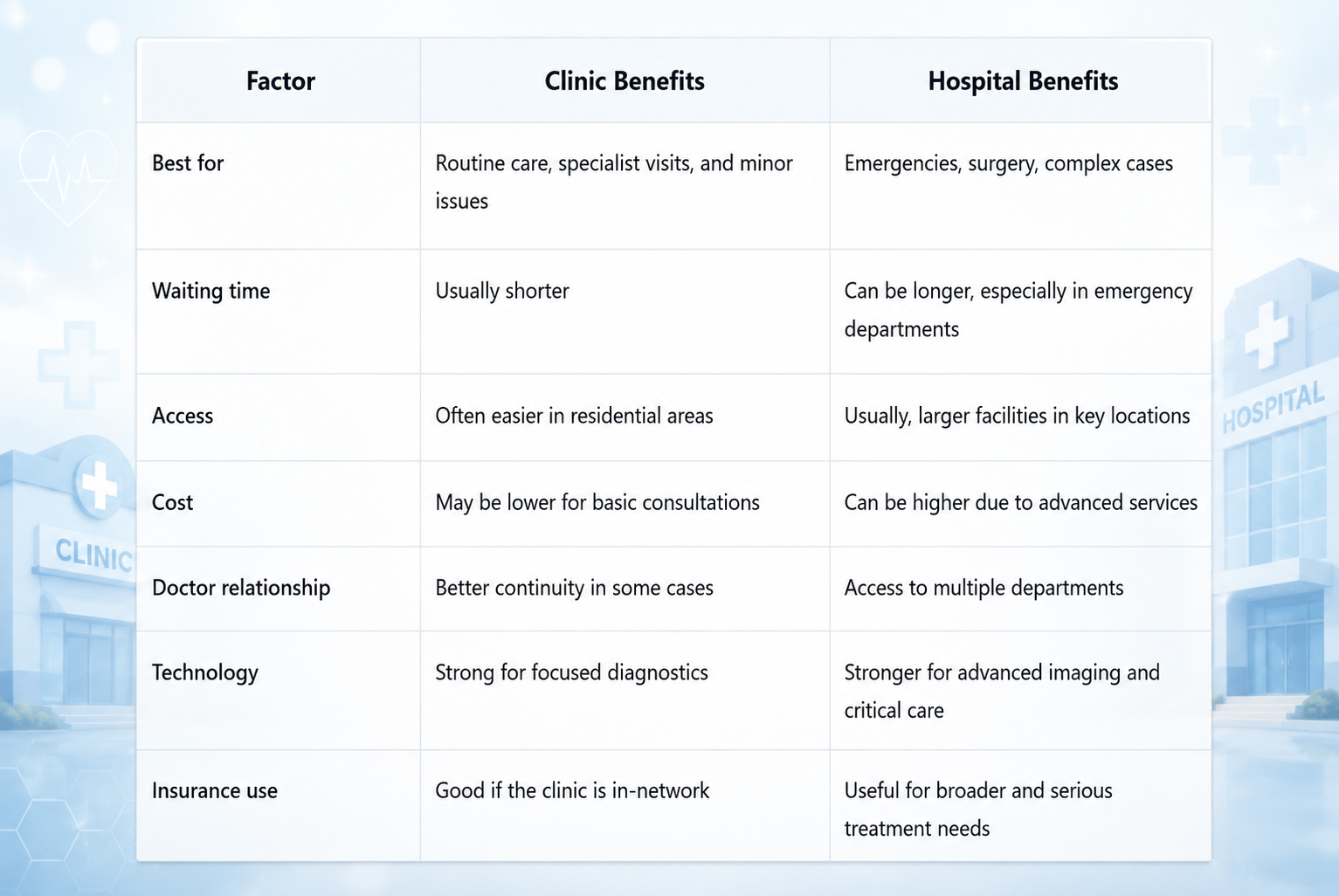
Factor | Clinic Benefits | Hospital Benefits |
|---|---|---|
Best for | Routine care, specialist visits, and minor issues | Emergencies, surgery, complex cases |
Waiting time | Usually shorter | Can be longer, especially in emergency departments |
Access | Often easier in residential areas | Usually, larger facilities in key locations |
Cost | May be lower for basic consultations | Can be higher due to advanced services |
Doctor relationship | Better continuity in some cases | Access to multiple departments |
Technology | Strong for focused diagnostics | Stronger for advanced imaging and critical care |
Insurance use | Good if the clinic is in-network | Useful for broader and serious treatment needs |
The Hospital Advantage in 2026: Comprehensive Care and Advanced Technology
Hospitals remain the right choice when a condition is serious, unclear, or needs multiple departments. If a patient needs emergency care, surgery, inpatient monitoring, or advanced scans, a hospital is usually safer. Hospitals also have a stronger role in advanced diagnostics and AI-supported healthcare. Dubai’s digital health direction focuses on patient-centric, data-driven care through digital innovation, which fits naturally into larger hospital systems, where records, departments, labs, and imaging can connect more easily.
AI in healthcare is also being regulated. Dubai’s AI policy for healthcare requires monitoring and evaluation frameworks for AI solutions used in the healthcare sector, which matters as hospitals and larger providers adopt diagnostic and workflow tools.
When a Hospital Is the Right Choice
Choose a hospital when the situation involves:
Chest pain or breathing difficulty
Stroke symptoms
Severe injuries or bleeding
Major burns
Severe allergic reactions
High-risk pregnancy concerns
Serious infections
Surgery or inpatient care
Advanced scans or specialist teams
A condition needing multiple departments
For simple fever, mild infection, skin irritation, dental pain, muscle strain, or routine checkups, a clinic may be enough. For anything that feels dangerous or rapidly worsening, a hospital is the better call.
Hybrid Models and Integrated Care Networks
The line between clinics and hospitals is becoming less rigid. Dubai is moving toward integrated care, where patients can start at a clinic, receive digital follow-ups, and be referred to a hospital when needed. This model works well because healthcare is not always one visit. A patient may need consultation, blood tests, imaging, medication, follow-up, insurance approval, and sometimes a specialist referral. When these steps are connected, the patient experience improves.
Telemedicine is part of this shift. DHA’s telehealth standards cover documentation, referrals, prescriptions, provider responsibilities, and patient access to telehealth records, indicating that virtual care in Dubai is becoming more structured.
Benefits of an Integrated Healthcare Approach
An integrated model can help patients by offering:
Smoother referrals from clinic to hospital
Better access to medical records
Less repeated testing
Faster follow-up care
Easier chronic condition management
More convenient telehealth support
Clearer coordination between providers
This is especially useful for diabetes, heart conditions, pregnancy care, long-term physiotherapy, pediatric care, and post-surgery recovery.
Factors Influencing Choice: A Deeper Dive
Cost and Insurance Coverage
Insurance is one of the biggest deciding factors in Dubai. A clinic may look affordable, but if it is outside your insurance network, the out-of-pocket cost can rise quickly. A hospital may be more expensive, but insurance may cover it better depending on your plan.
Before booking, patients should check:
Is the provider in-network?
Does the plan need pre-approval?
Is there a co-pay?
Are diagnostics covered?
Is follow-up included?
Are medicines covered?
Is a specialist referral required?
This step can prevent surprise bills.
Conclusion: Navigating Healthcare in Tomorrow’s Dubai
Clinics and hospitals are not competing for the same patient needs. They serve different roles. Clinics are becoming the practical choice for routine care, specialist consultations, faster access, and personalized treatment. Hospitals remain essential for emergency care, advanced diagnostics, surgeries, and the treatment of complex medical conditions.
The best choice depends on the situation. For mild or routine health concerns, a clinic can save time and provide focused care. For serious symptoms, unclear conditions, or treatment that needs multiple departments, a hospital is safer. Dubai’s healthcare future is likely to be more connected, digital, and patient-led. The smartest patients will not simply choose the biggest facility. They will choose the right level of care for the right problem.
Frequently Asked Questions
Is it better to visit a clinic or hospital in Dubai?
For routine health issues, a clinic is usually more convenient. For emergencies, severe symptoms, surgery, or complex conditions, a hospital is the better choice.
Are clinics cheaper than hospitals in Dubai?
Clinics are often cheaper for basic consultations, but the final cost depends on your insurance network, co-pay, tests, medicines, and whether pre-approval is required.
Can clinics in Dubai handle urgent care?
Some clinics handle minor urgent care, such as fever, infections, minor injuries, vomiting, allergies, and mild pain. Life-threatening symptoms should go to a hospital emergency department.
Can telemedicine replace clinic visits in Dubai?
Telemedicine is useful for follow-ups, basic consultations, prescription guidance, and reviewing reports. It cannot replace physical examination, emergency care, procedures, or detailed diagnostics.
Related Posts
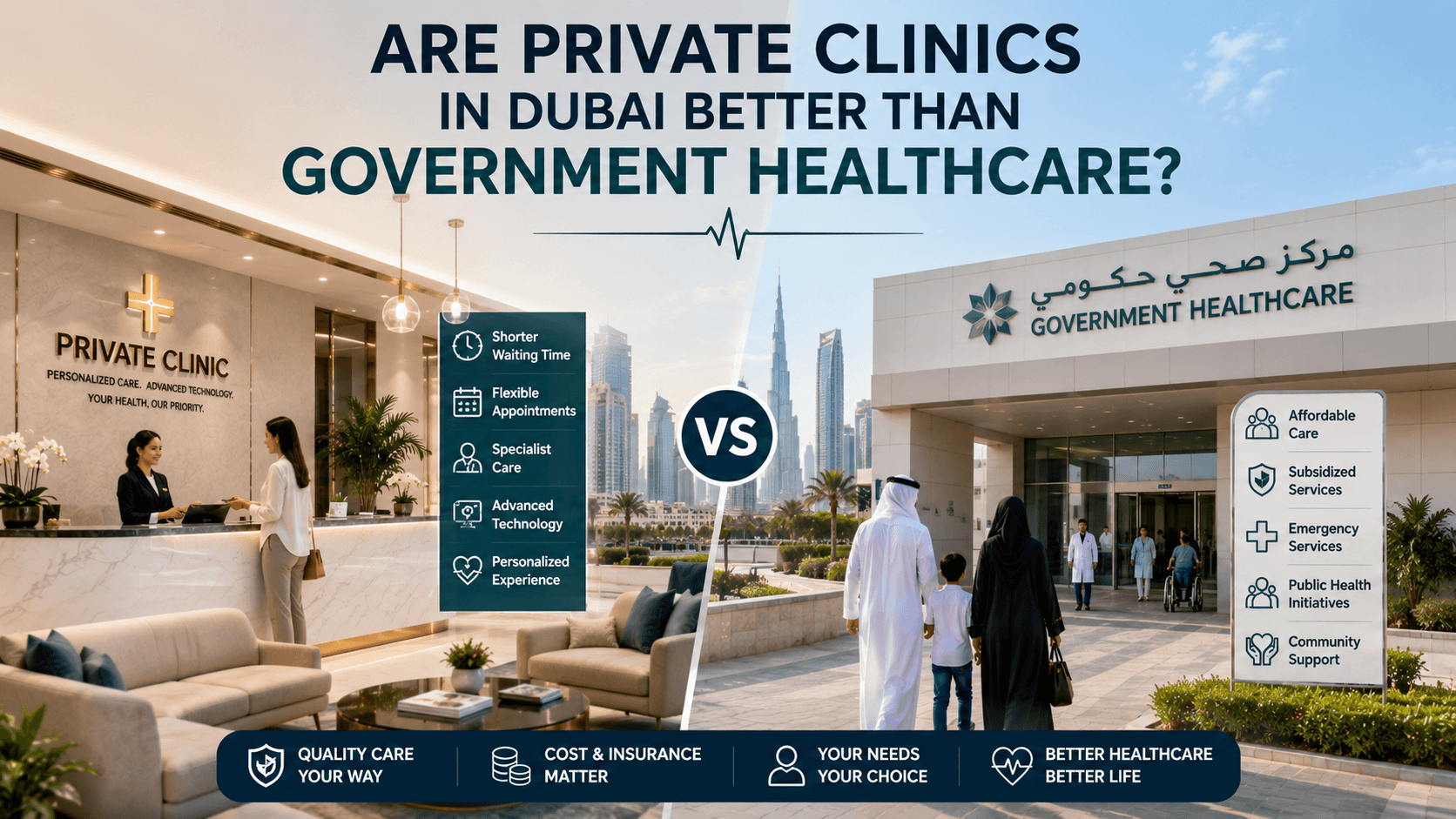
Are Private Clinics in Dubai Better Than Public Healthcare?
Compare private clinics and government healthcare in Dubai. Learn the cost, insurance, comfort, and care factors residents and expats should check first.

Dubai Clinics for Tourists: Your Essential Guide
Planning medical treatment in Dubai? Learn how tourists can choose clinics, check costs, understand insurance, and book safer healthcare.